Triton
Neptune's captured backward moon. Triton orbits Neptune backwards and was probably captured from the Kuiper Belt. Its nitrogen geysers and frozen surface seen by Voyager 2 in 1989.
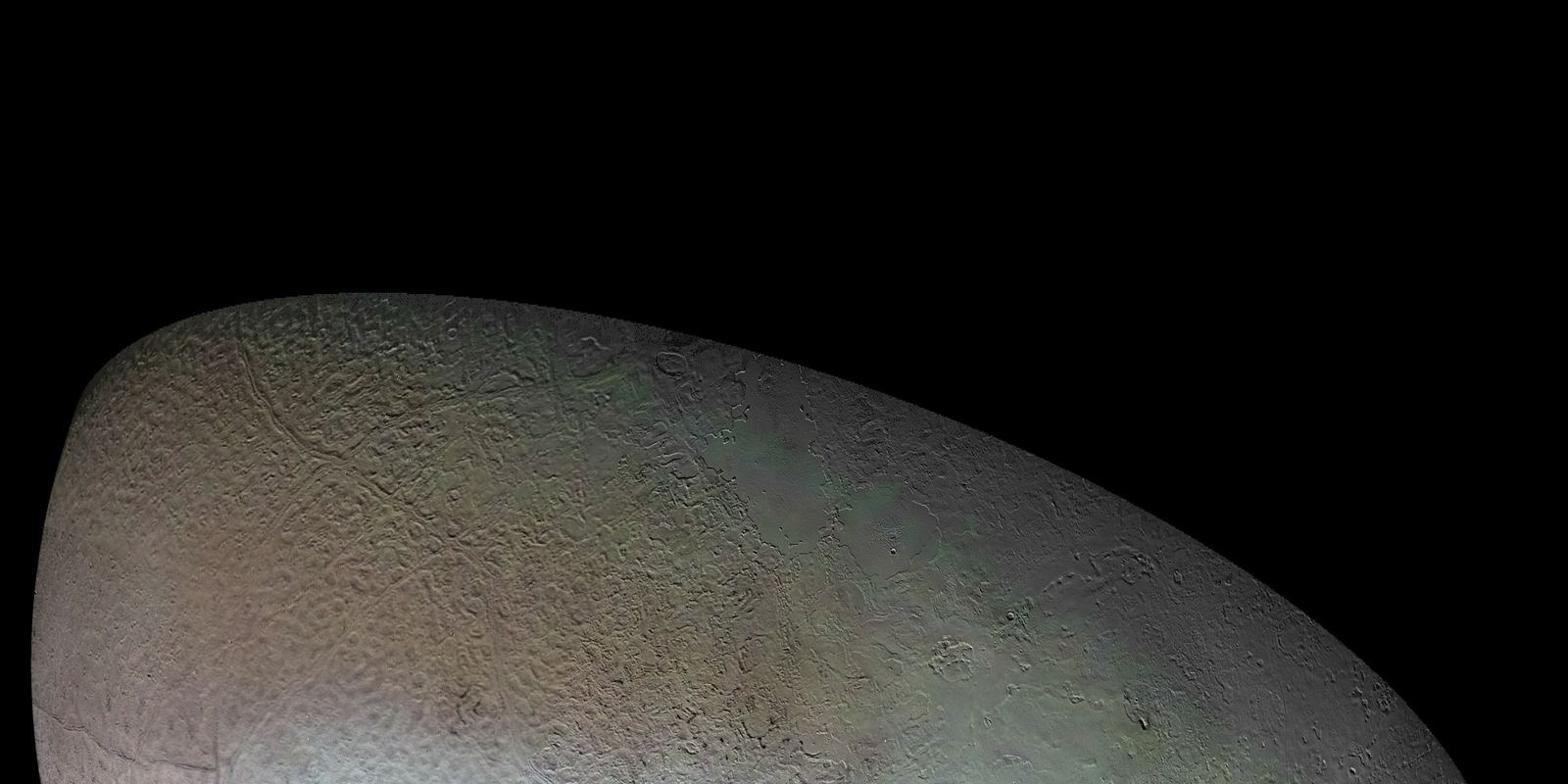
Triton (Voyager 2, 1989): NASA / Jet Propulsion Lab / U.S. Geological Survey, Public domain
A moon going the wrong way
Triton is Neptune's largest moon by far and the only large moon in the solar system that orbits in the opposite direction to its planet's spin. That retrograde orbit is a strong clue that Triton did not form around Neptune. Most scientists think it was once a dwarf planet in the Kuiper Belt, similar to Pluto, that Neptune captured long ago.
A frozen, active surface
Voyager 2 flew past in August 1989 and found a surprising world. Parts of the surface look like the skin of a cantaloupe melon, a terrain seen nowhere else. Dark streaks on the south polar cap turned out to be deposits from geysers of nitrogen gas carrying dust up to about 8 km high before winds blew it sideways.
Triton is one of the coldest surfaces ever measured, yet it is still geologically active.
A slow fall
Because Triton orbits backwards, tides are slowly pulling it closer to Neptune. In the very distant future, perhaps billions of years from now, it may break apart and form a ring around the planet.
Discovery and missions
William Lassell spotted Triton in October 1846, just 17 days after Neptune itself was discovered. Voyager 2 remains the only spacecraft to visit. Several mission concepts, such as NASA's proposed Trident flyby, have been studied to return, because Triton may also hide a subsurface ocean and could tell us a lot about Pluto-like worlds.
A preview of Pluto
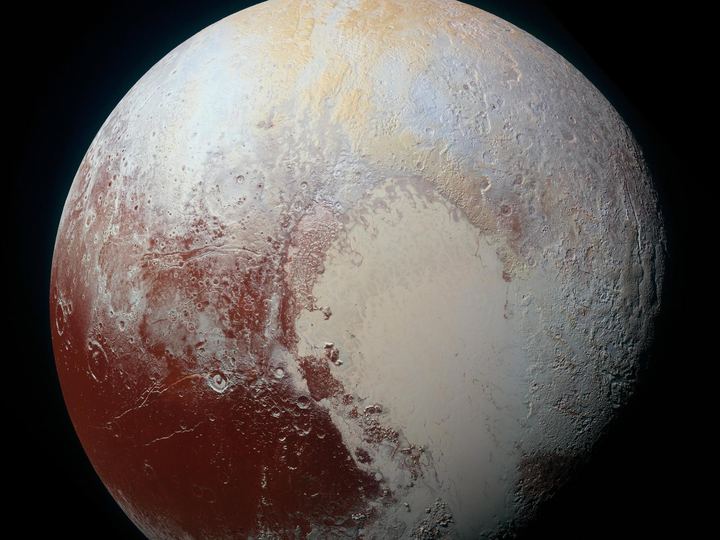
When New Horizons reached Pluto in 2015, scientists compared its icy plains and hazy atmosphere with what Voyager 2 had seen at Triton 26 years earlier. The two worlds are similar in size and made of similar ices, which supports the idea that Triton began life in the Kuiper Belt. Studying them together helps researchers understand the many icy dwarf planets that still orbit far beyond Neptune, most of which no spacecraft has ever seen up close.
- Triton (Voyager 2, 1989): NASA / Jet Propulsion Lab / U.S. Geological Survey, Public domain
Text written by Planetinio.