
Space FAQ: Big Questions, Short Answers
Short answers to big questions, checked against NASA and ESA.
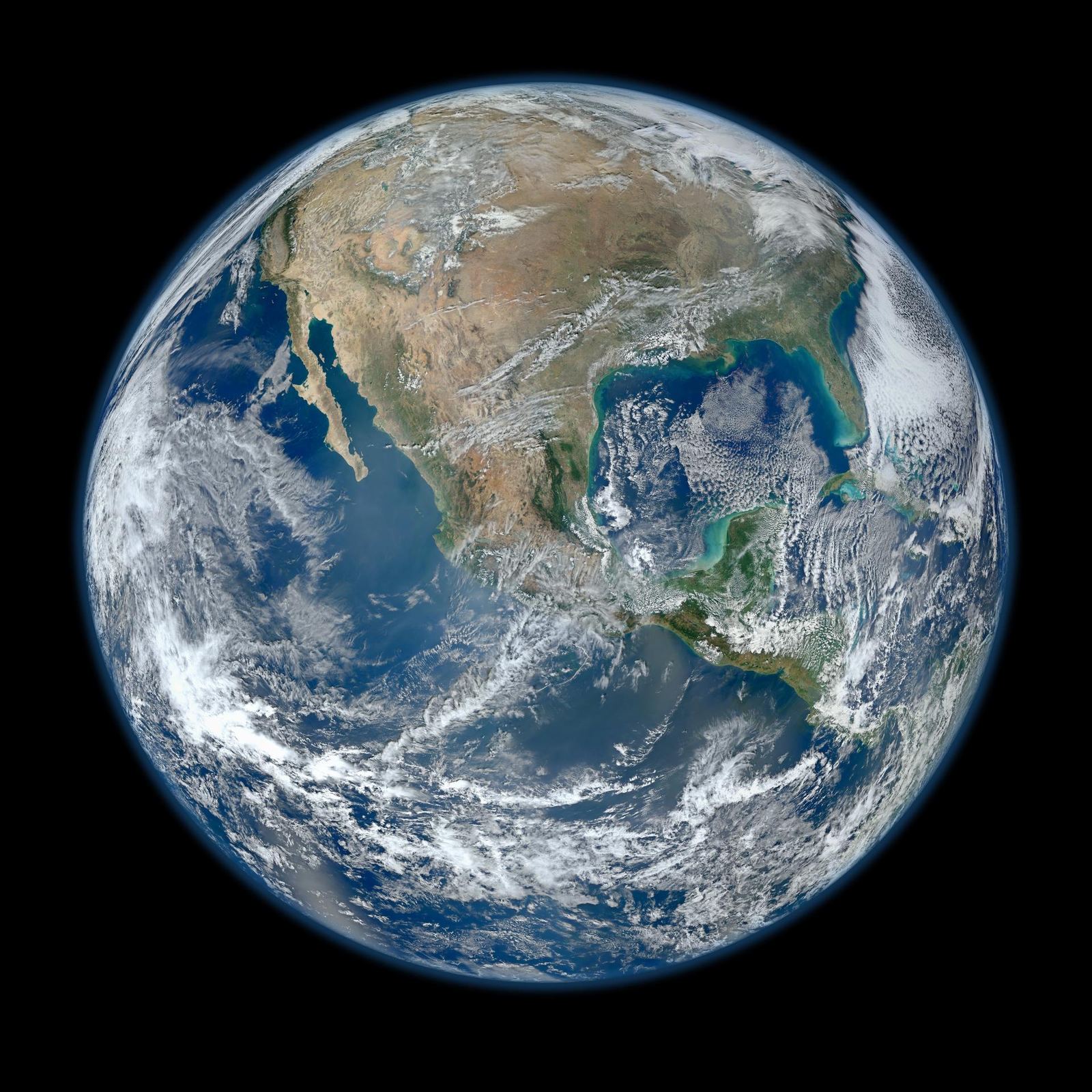
Blue Marble 2012 from the Suomi NPP satellite: NASA Goddard Space Flight Center, Public domain
FAQ
Why is Pluto not a planet anymore?
In 2006 the IAU defined a planet as a round body orbiting the Sun that has cleared its orbit. Pluto shares its zone with many Kuiper Belt objects, so it became a dwarf planet.
Which planet has the most moons?
Saturn, with more than 270 confirmed moons as of 2025. Most are tiny, irregular objects only a few kilometres across.
What is the hottest planet?
Venus. Its thick carbon dioxide atmosphere traps heat, keeping the surface around 465 degrees Celsius, hotter than Mercury.
How far away is the nearest star after the Sun?
Proxima Centauri, about 4.24 light-years away.
Could humans live on Mars?
Not without heavy protection. Mars has a thin, unbreathable atmosphere, freezing temperatures and high radiation. Future bases would need shelters, oxygen and water from local ice.
Is there life elsewhere in the solar system?
We do not know yet. The best places to search are Mars (for ancient microbes) and ocean worlds such as Europa and Enceladus.
How old is the solar system?
About 4.6 billion years, based on the ages of the oldest meteorites.
Why do astronauts float?
In orbit they are in continuous free fall around Earth, so they feel weightless even though gravity is still strong there.
Can you see planets without a telescope?
Yes. Mercury, Venus, Mars, Jupiter and Saturn are visible to the naked eye at the right times. Venus and Jupiter are often the brightest points in the night sky after the Moon.
What is the farthest spacecraft?
Voyager 1, more than 24 billion km from Earth and travelling through interstellar space.
The Planetinio collection
Tees and hoodies in the Planetinio colors, printed to order in the USA. Use code VIP15 from the newsletter for 15% off your first order.




- NASA Science: Our Solar System
- NASA Science: Planetary Fact Sheet (NSSDCA)
- NASA: Moons of the solar system
Facts on this page were checked against these sources (updated Oct 12, 2026). Spot an error? Email hello@fireempireshop.com.