Venus
Earth's hellish twin. Venus is nearly Earth's size, but its thick carbon dioxide air traps heat at about 465 °C. Discover its clouds, volcanoes and backward spin.
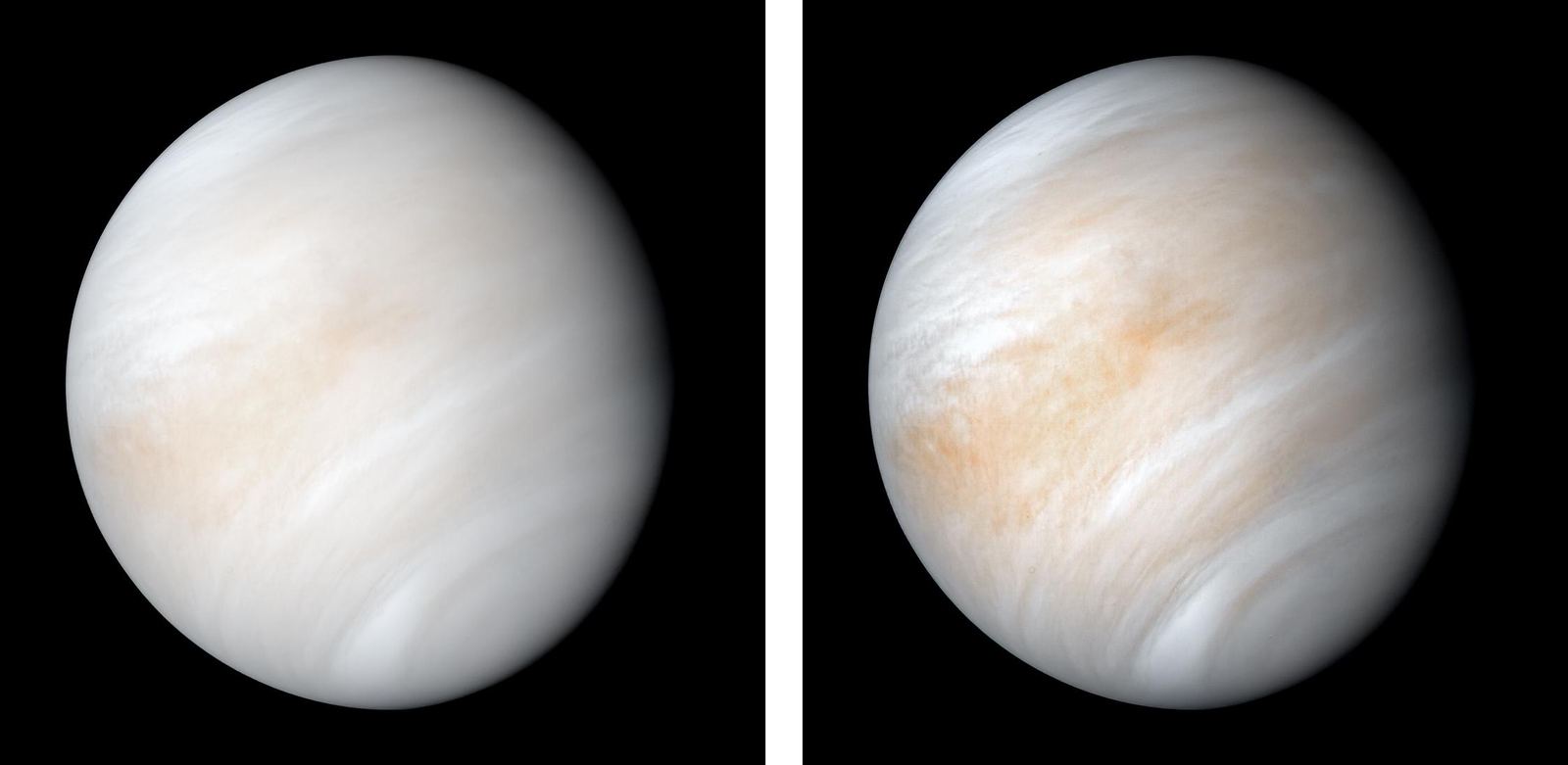
Venus from Mariner 10: NASA/JPL-Caltech, Public domain
The hottest planet in the solar system
Venus is almost the same size as Earth and made of similar rock, which is why it is often called our twin. But stepping onto its surface would be fatal in seconds. The air is mostly carbon dioxide and so thick that the pressure at the ground is about 90 times what we feel at sea level, similar to being deep under the ocean.
That heavy blanket of gas traps heat in a runaway greenhouse effect. The surface sits at about 465 °C day and night, from pole to equator. Even though Mercury is closer to the Sun, Venus is hotter.
Visiting would also mean an orange-tinted gloom. So little sunlight filters through the clouds that the landscape would look dim and hazy, like a smoggy evening, even at noon. The thick air would feel more like a liquid than a gas as you tried to move through it.
Video: Magellan: Venus False-Color Terrain. Credit: NASA's Goddard Space Flight Center Scientific Visualization Studio; Magellan data NASA/JPL (source). NASA media; no endorsement implied.
Clouds of acid and a backward spin
Venus is wrapped in bright clouds made of sulfuric acid droplets that reflect most of the sunlight hitting them. That is why it shines so brilliantly in our evening or morning sky, often outshining every star.
The planet also behaves strangely. It rotates very slowly and in the opposite direction from most planets, so on Venus the Sun would rise in the west and set in the east. One rotation takes about 243 Earth days, longer than its 225-day year. Yet the upper clouds race around the whole planet in roughly four Earth days, a puzzle scientists call super-rotation.
A volcanic landscape seen through radar
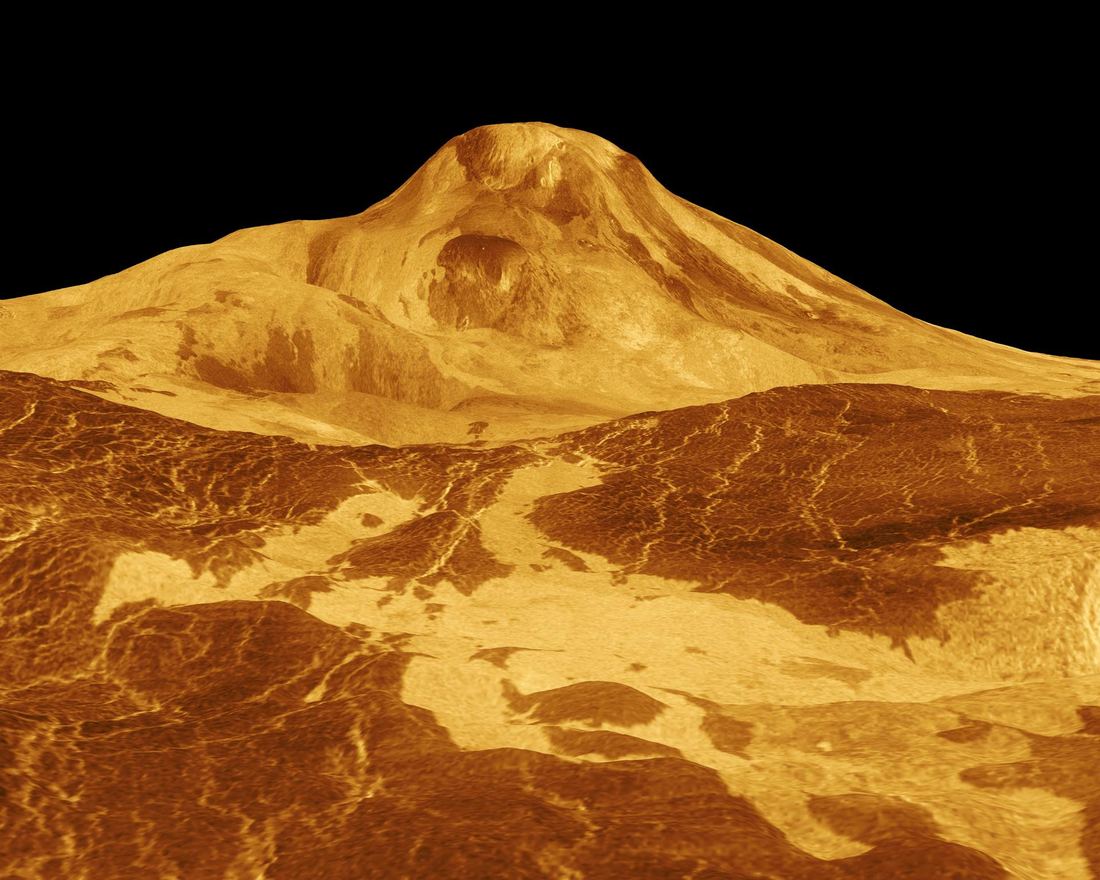
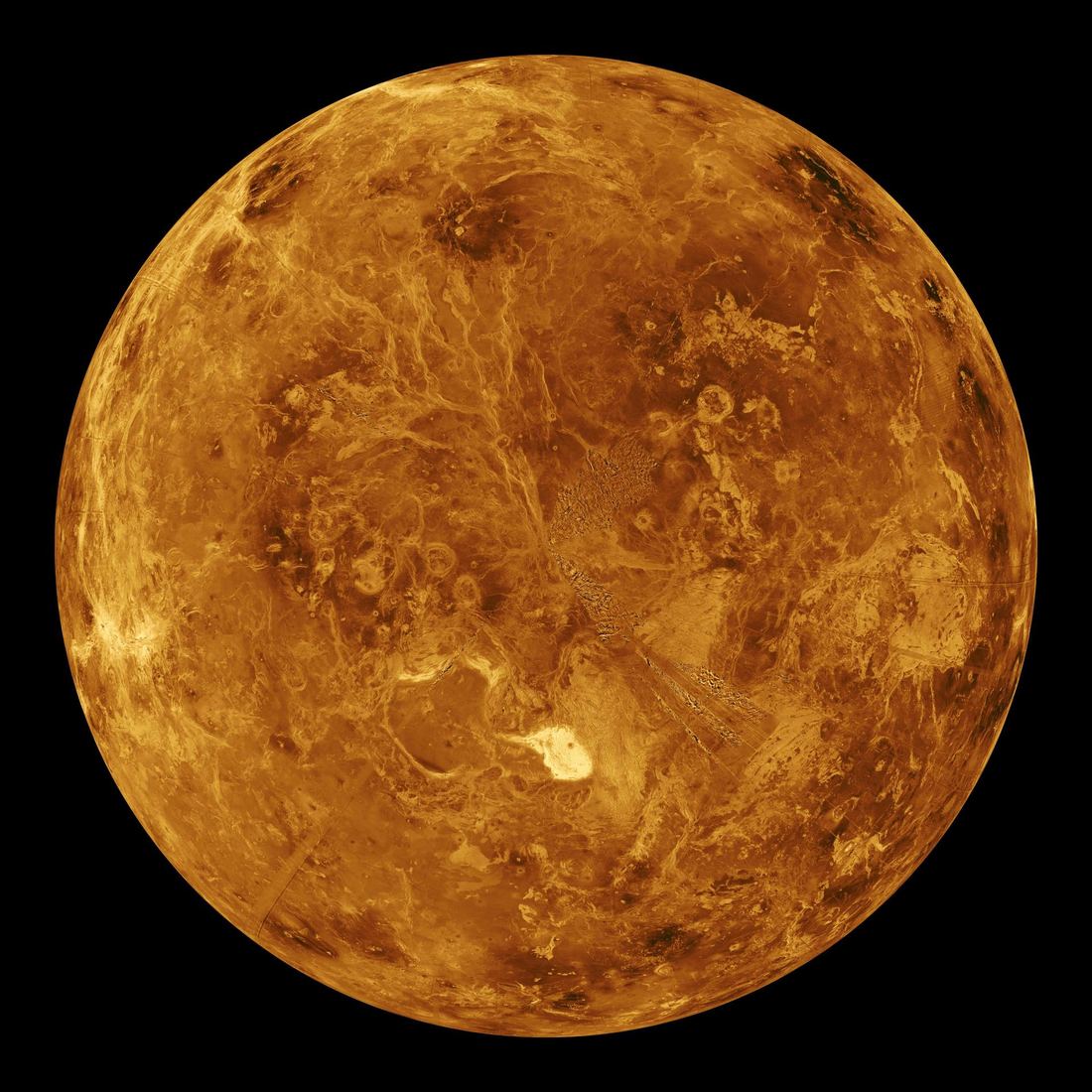
Because visible light cannot pierce the clouds, NASA's Magellan spacecraft mapped Venus with radar between 1990 and 1994. It revealed a world shaped by volcanoes: vast lava plains, pancake-shaped domes and giant peaks such as Maat Mons. There are relatively few craters, which tells scientists that much of the surface was repaved by lava within the last several hundred million years.
Some researchers suspect Venus once had shallow oceans before its greenhouse effect ran out of control. Recent studies of old Magellan data have even found signs of surface changes that may point to ongoing volcanic activity.
Landing on Venus
Venus was the first planet humans visited with a spacecraft: NASA's Mariner 2 flew past in 1962. The Soviet Union's Venera landers later reached the surface and sent back the only photos ever taken from the ground, before the crushing heat silenced them, after anywhere from about 20 minutes to two hours.
More recently, Parker Solar Probe captured visible-light images of the surface glowing through the clouds during its Venus flybys. Planned missions, including NASA's DAVINCI probe and the European Space Agency's EnVision orbiter, aim to learn whether Earth's twin was ever a habitable world.
Facts on this page were checked against these sources.
- Venus from Mariner 10: NASA/JPL-Caltech, Public domain
- Maat Mons, a giant Venus volcano, from Magellan radar: NASA/JPL, Public domain
- Venus's northern hemisphere mapped by Magellan: NASA/JPL, Public domain
- Video: Magellan: Venus False-Color Terrain, NASA's Goddard Space Flight Center Scientific Visualization Studio; Magellan data NASA/JPL, NASA (public domain)
Text written by Planetinio.